


You remember more.
Keeping a dream diary can increase recall, especially if you rarely remember your dreams. Interest in dreams also goes with recall.
A dream diary for the first minute of the morning.
Request accessSome disappear by morning.
One tap, no typing, in the language you dreamt in.
Your own recording always stays beside the text.
Ask for a painting of the dream: no names, no faces.
Who was that? What did the place remind you of?
Who is the teacher to you?
You say what fits; the rest is dropped.
Labelled as tradition, not prediction.
People, places and things that return across your nights, with the dreams behind each.
Your dream signs, collected night by night.
Recordings saved on your phone first, even offline. Text when you're back online. Your own words, still yours in the morning.
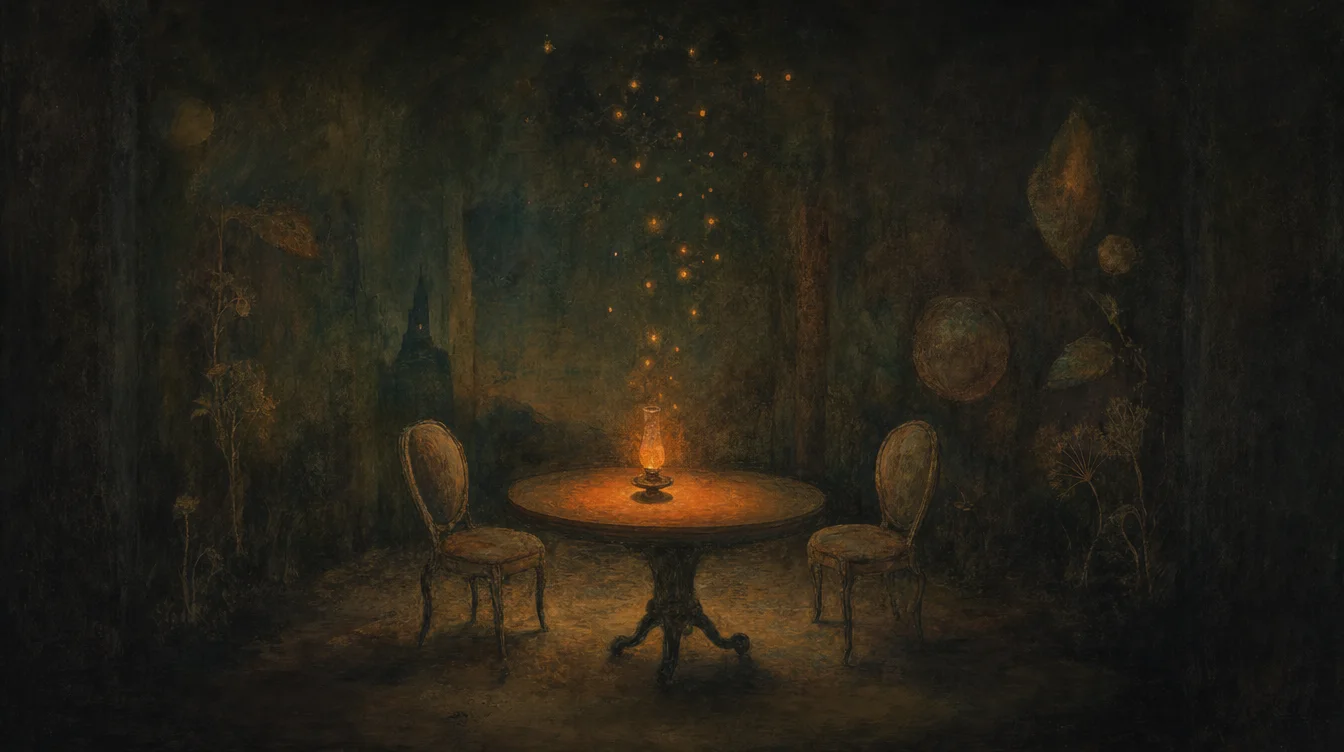
I was in a library, but the floor was under water, up to my knees. Nobody seemed to mind.
A train came through between the shelves, very slowly, and my old teacher waved from a window.
I had to find one book before it left, and I knew the shelf but not the title. I remember thinking the water was warm. Then I woke up.
An invented dream, for you to try.Who is the teacher to you?
The book you were looking for: did it remind you of anything?
You knew the shelf but not the title, and the train was leaving. One lens says dreams carry what occupies us while awake; whether something like this is on your mind is yours to say.
Continuity hypothesis, Domhoff 2003 · your own wordsDreams often stitch recent things together with no message. This may be one of those.
Common dream featureNot every dream needs a meaning.
Sometimes, it's enough to remember.
Keeping a dream diary can increase recall, especially if you rarely remember your dreams. Interest in dreams also goes with recall.
Dreams often carry the people and concerns of waking life. The continuity hypothesis offers one way to think about that connection.
Hill's approach starts with your own associations, then insight, then action. It was studied in therapy sessions. It does not make any one reading true.
Remembering dreams and spotting dream signs are starting practices. About half of people report having had a lucid dream at least once.
What it won't do: predict the future, diagnose anything, or replace a therapist.
No ads, no tracking, nothing sold. Export everything, delete everything, any time.
The AI runs only when you press the button, and you're told which service it uses. Paintings never show names or faces.
Nightmares and grief get gentleness, not analysis.
The app reflects your own words, asks before going deeper, and can point you to support.
No. Saydream is a place for self reflection. It does not diagnose anything or replace a therapist.
No. Readings are possibilities for you to consider. Old dream books are labelled as tradition, never prediction.
Speak in the language you dreamt in. You can check the transcript and fix any word. If you want to know how well your language works, ask in your request.
Yes. You can write your dream, or speak and then edit the text. Your original recording stays beside your words.
Your dreams stay in your account. AI runs only when you ask, and the app tells you which service will process your words. Nothing is sold.
Saydream is in early access while it is being tested: invite-only, and paid. Send a request at the end of this page. A person reads each one and writes back. Sending a request costs nothing.
Until morning.
Saydream is being tested with a small group before it opens. Early access is invite-only and paid, and each request is read by a person, who writes back.
Already invited? Sign in
We read every request and will write to you.